Disorganized attachment style
Result 4 of 4Both movements may be protecting something.
closeness and retreat can both become protection
§ I · What it is
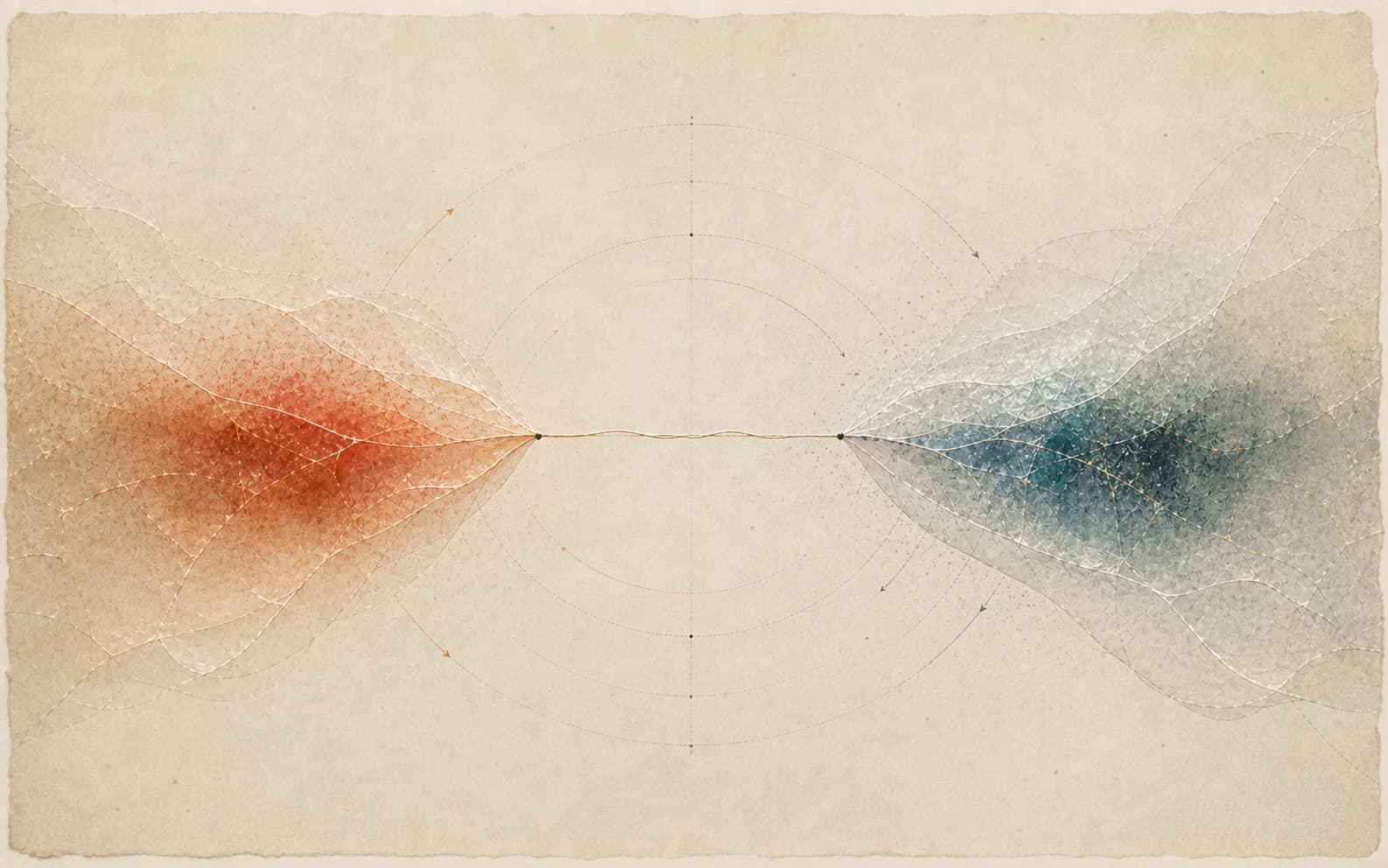
Disorganized attachment, also called fearful-avoidant, combines high worry about being left with high discomfort around closeness. Wanting someone near and wanting to pull away can show up together or in quick turns.
§ II · The reading
Reassurance and escape can coexist. Fast closeness and fast withdrawal may alternate; slowing the pace can make the current need easier to read.
I move closer, then back. Both movements protect something.
§ III · In practice
Where it sits
higher closeness alarm · higher distance need
§ IV · Three things to try
- 01
Name only now: I want closeness, and I am scared. Let us slow down.
- 02
Choose a slower, repeatable pace over intense starts and stops.
- 03
Seek qualified support if this pattern repeatedly causes distress or harm.
§ V · How the test lands here
Disorganized is the result when both scores land above 60 out of 100: closeness alarm (anxiety) and space need (avoidance). If either score sits between 40 and 60, the test gives no label rather than force one.
It borrows the anxiety and avoidance dimensions from adult attachment research but is not the ECR-R or any clinical instrument.
Attachment style test: free on Mesonar, 20 statements, about 4 minutes. No signup, no email, no app.
§ VI · All 4 results
Attachment style test ↗§ VII · Questions
How does the test decide on Disorganized?
Disorganized is the result when both scores land above 60 out of 100: closeness alarm (anxiety) and space need (avoidance). If either score sits between 40 and 60, the test gives no label rather than force one.
Is Disorganized a fixed type?
Not a diagnosis. This result does not infer childhood or cause. It is a self-reflection reading, not a clinical, diagnostic or professional assessment.
Is the test free?
Attachment style test: free on Mesonar, 20 statements, about 4 minutes. No signup, no email, no app.