Avoidant attachment style
Result 3 of 4Space is not rejection. It is how clarity returns.
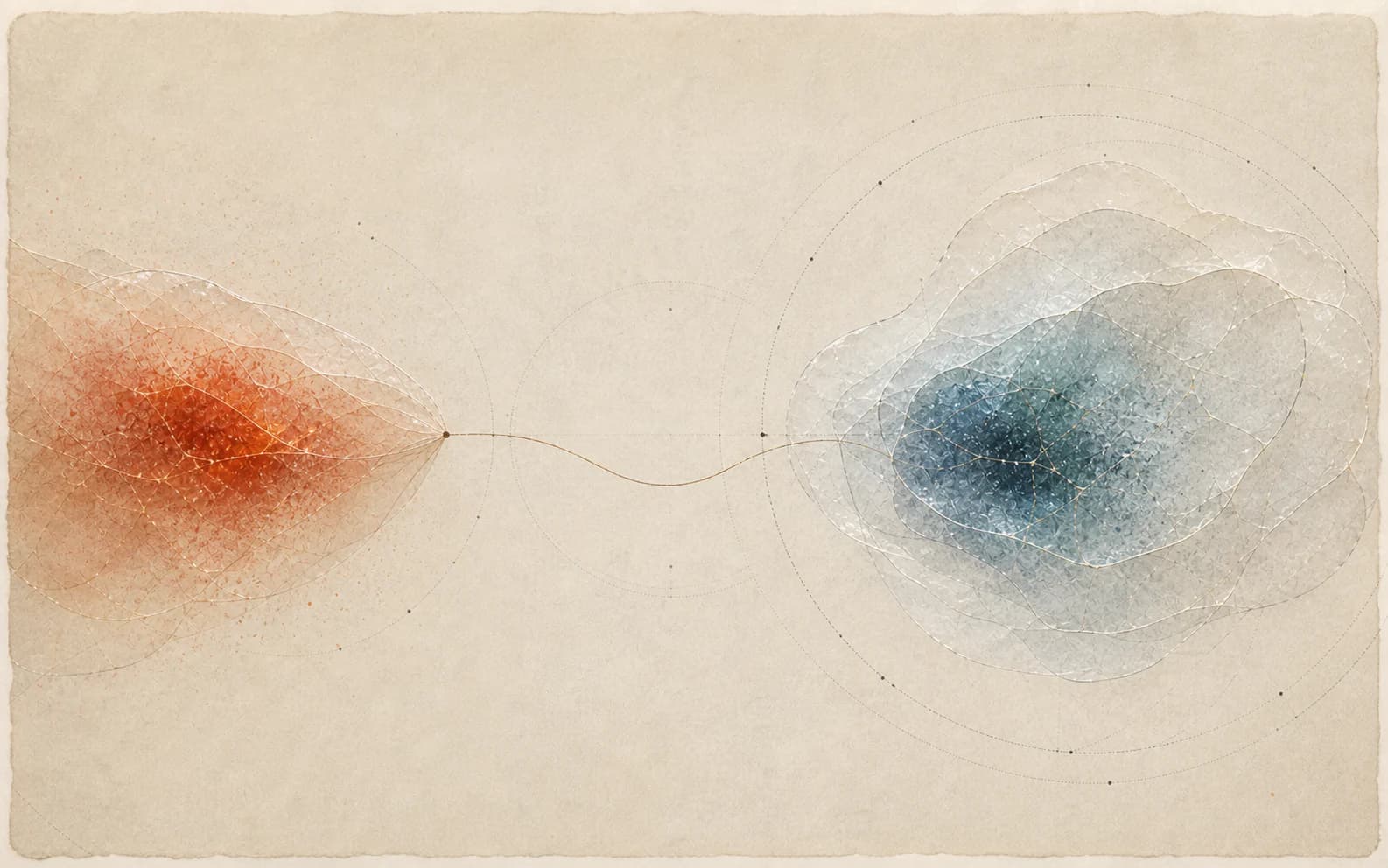
distance can make clarity easier to recover
§ I · What it is
In adult attachment research, avoidant attachment means little worry about being left but discomfort when closeness gets intense. Space and self-reliance feel safer, and stepping back is often how clarity returns.
§ II · The reading
Private processing may feel natural, high emotion can raise the need to step back, and a named return time helps the pause stay legible.
Space is not rejection. It is how clarity returns.
§ III · In practice
Where it sits
lower closeness alarm · higher distance need
§ IV · Three things to try
- 01
Name the pause: I need an hour to think. I will return at nine.
- 02
Share one unfinished thought before the full solution is ready.
- 03
Treat another person’s request for contact as information, not pressure by default.
§ V · How the test lands here
Avoidant is the result when space need (avoidance) lands above 60 out of 100 and closeness alarm (anxiety) lands below 40. If either score sits between 40 and 60, the test gives no label rather than force one.
It borrows the anxiety and avoidance dimensions from adult attachment research but is not the ECR-R or any clinical instrument.
Attachment style test: free on Mesonar, 20 statements, about 4 minutes. No signup, no email, no app.
§ VI · All 4 results
Attachment style test ↗§ VII · Questions
How does the test decide on Avoidant?
Avoidant is the result when space need (avoidance) lands above 60 out of 100 and closeness alarm (anxiety) lands below 40. If either score sits between 40 and 60, the test gives no label rather than force one.
Is Avoidant a fixed type?
Wanting space is not coldness or a fixed type. It is a self-reflection reading, not a clinical, diagnostic or professional assessment.
Is the test free?
Attachment style test: free on Mesonar, 20 statements, about 4 minutes. No signup, no email, no app.